Skip to content
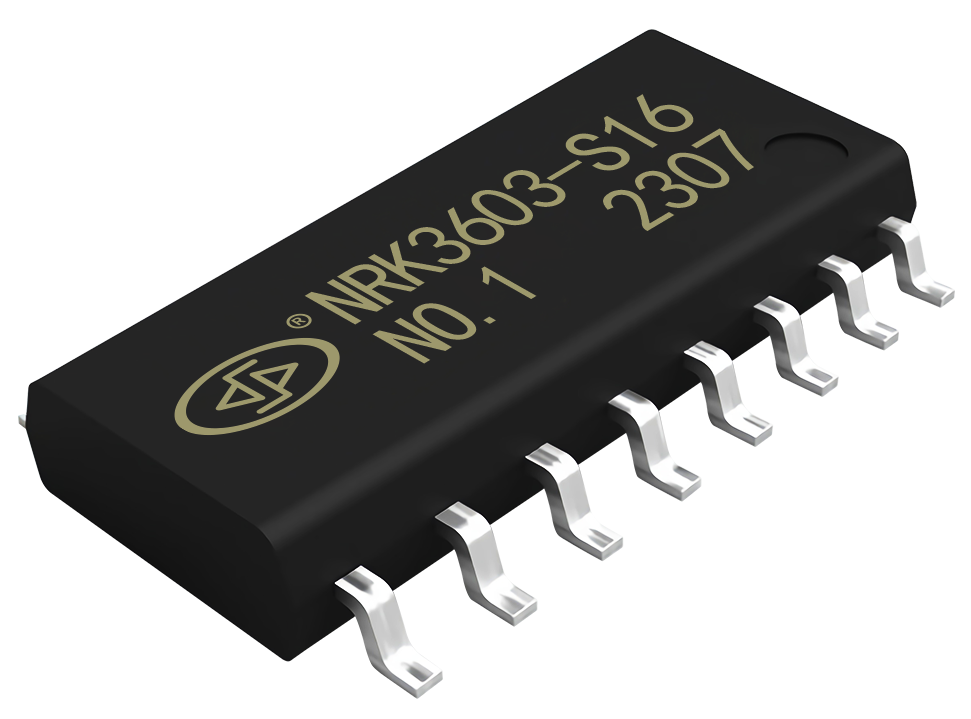
Table of Contents
Voice chips have become essential components in modern electronics, powering everything from smart home devices and toys to medical equipment and industrial machinery. Selecting the right voice chip can make or break your product’s user experience, yet many designers struggle with the technical specifications and trade-offs involved. This comprehensive guide breaks down the critical parameters you need to understand to make an informed decision.
Understanding Voice Chip Fundamentals
Voice chips, also known as audio playback ICs or sound modules, are specialized integrated circuits designed to store and reproduce pre-recorded audio. Unlike general-purpose microcontrollers, these chips are optimized specifically for audio playback, offering advantages in power efficiency, audio quality, and ease of implementation.
Modern voice chips typically fall into three categories: dedicated playback chips (one-time programmable or mask ROM), flash-based chips with in-system programming capability, and hybrid solutions that combine playback with recording functionality. Understanding which category fits your application is the first step in your selection process.
Critical Parameter #1: Audio Quality and Sampling Rate
Audio quality directly impacts how users perceive your product. The sampling rate and bit depth determine the fidelity of reproduced sound.
Sampling rate measures how many times per second the audio signal is captured. Common options include 8 kHz for basic voice applications, 16 kHz for clear speech, 22.05 kHz for moderate music quality, and 44.1 kHz for CD-quality audio. For most voice prompts and notifications, 16-22 kHz provides an excellent balance between quality and memory efficiency.
Bit depth affects dynamic range and audio clarity. While 8-bit audio suffices for simple beeps and low-quality voice, 16-bit audio delivers significantly better quality with reduced background noise. Professional applications typically require 16-bit resolution minimum.
Consider your application context: a children’s toy might work perfectly with 8 kHz, 8-bit audio, while a medical device providing critical instructions should use at least 16 kHz, 16-bit audio for maximum clarity.
Critical Parameter #2: Memory Capacity and Storage Type
Memory capacity determines how much audio content your chip can store. Calculate your requirements by considering:
- Total duration of all audio files needed
- Sampling rate and bit depth (higher quality = more memory)
- Compression algorithms available
- Future content expansion needs
For example, one minute of uncompressed audio at 16 kHz, 16-bit mono requires approximately 1.92 MB. With ADPCM compression (typically 4:1 ratio), this drops to about 480 KB.
Storage types include:
OTP (One-Time Programmable): Cost-effective for high-volume production with fixed content. Once programmed, content cannot be changed. Ideal for products with stable, unchanging audio requirements.
Mask ROM: The most economical option for very high volumes (typically 10,000+ units). Audio content is programmed during chip manufacturing. Lead times are longer but per-unit costs are minimal.
Flash memory: Allows reprogramming and content updates, essential for prototyping and products requiring field updates. More expensive but offers maximum flexibility.
External storage: Some chips support external SPI flash or SD cards, enabling massive storage capacity and easy content updates without chip replacement.
Critical Parameter #3: Power Consumption and Efficiency
Power consumption dramatically affects battery life in portable devices. Voice chips vary widely in their power requirements across three states:
Active playback current ranges from 10-50 mA for typical chips, though ultra-low-power designs can operate below 5 mA. This is critical for frequently-used features.
Standby current should be below 100 µA for battery-powered applications, with the best chips achieving under 10 µA. Since devices spend most time in standby, this parameter often dominates overall power consumption.
Peak current during startup can momentarily surge to 100+ mA. Ensure your power supply can handle these transients without voltage droops that might cause system resets.
Calculate expected battery life using this formula:
Battery Life (hours) = Battery Capacity (mAh) / [Standby Current (mA) × Standby % + Active Current (mA) × Active %]
For example, with a 1000 mAh battery, 50 µA standby (95% of time), and 20 mA active (5% of time), expect approximately: 1000 / [0.05 × 0.95 + 20 × 0.05] ≈ 870 hours or 36 days.
Critical Parameter #4: Audio Output Characteristics
Understanding output specifications ensures proper integration with your audio system.
Output power typically ranges from 0.5W to 3W for integrated amplifiers. Match this to your speaker specifications—underpowering causes weak audio, while overpowering can damage speakers. For applications requiring more power, choose chips with line-level outputs and add external amplification.
Output configuration options include:
- Single-ended output (one speaker terminal to ground): Simple, lower cost, but lower power efficiency
- Differential/BTL (Bridge-Tied Load): Both speaker terminals driven, offering higher power and better noise immunity
- Stereo outputs: Essential for spatial audio effects
- DAC output: Line-level signal requiring external amplification
Signal-to-Noise Ratio (SNR) measures audio clarity versus background noise. Look for SNR above 80 dB for professional applications, while 70 dB suffices for many consumer products. Poor SNR results in audible hissing or buzzing during playback.
Total Harmonic Distortion (THD) should remain below 1% for good audio quality, with high-end applications requiring below 0.1%. High THD makes audio sound harsh or muddy.
Critical Parameter #5: Control Interface and Integration
The control interface determines how your microcontroller or system communicates with the voice chip.
Serial interfaces (UART, I2C, SPI) offer flexible control over playback, volume, and multiple audio files. These require a host controller but provide maximum functionality. I2C and SPI typically offer faster communication than UART.
GPIO/Parallel trigger provides the simplest integration—each pin directly triggers a specific audio file. No programming required, making it ideal for simple applications or quick prototyping. However, file selection is limited by available pins.
One-line serial protocol offers middle-ground complexity, controlling multiple functions through a single data line with simple commands.
Consider your development resources and product complexity when choosing. Simple products benefit from GPIO triggering’s simplicity, while sophisticated products need serial control’s flexibility.
Critical Parameter #6: Trigger Modes and Playback Features
Advanced playback features enhance user experience:
Trigger modes include:
- Edge-triggered: Audio plays once per trigger signal
- Level-triggered: Audio plays repeatedly while trigger is active
- Interrupt capability: New audio can interrupt currently playing audio
- Queuing: Multiple triggers queue for sequential playback
Playback controls worth considering:
- Volume control (fixed, software-adjustable, or hardware potentiometer)
- Pause/resume functionality
- Fast forward/rewind for longer audio files
- Random or sequential playback for multiple files
- Loop/repeat modes
Advanced features in premium chips:
- Mixing multiple audio channels simultaneously
- Real-time pitch or speed modification
- Built-in sound effects (echo, reverb)
- Voice recording capability (for interactive applications)
Critical Parameter #7: Operating Conditions and Reliability
Environmental specifications determine where your product can reliably operate.
Operating temperature range varies significantly:
- Commercial grade: 0°C to +70°C (most consumer electronics)
- Industrial grade: -40°C to +85°C (automotive, industrial equipment)
- Extended range: -40°C to +105°C (extreme environment applications)
Don’t assume room-temperature operation—consider storage conditions, direct sunlight exposure, and internal heat from other components.
Supply voltage tolerance affects system design. Wide-input chips (2.0-5.5V) simplify power supply design and accommodate battery voltage drop. Fixed-voltage chips require regulated supplies but may offer better audio performance.
ESD protection and noise immunity matter for products users directly interact with or use in electrically noisy environments. Look for IEC 61000-4-2 Level 3 or higher for good human interface robustness.
Critical Parameter #8: Development and Production Considerations
Practical factors that impact your development timeline and costs:
Programming method affects production scalability:
- In-circuit programming via UART/USB during assembly
- Pre-programmed chips ordered from manufacturer
- One-time programming requiring specialized equipment
- Field-updateable for products requiring remote updates
Development tools and support accelerate your timeline:
- Free evaluation boards reduce risk
- Audio conversion software simplifies content preparation
- Comprehensive datasheets and application notes
- Responsive technical support
- Reference designs matching your application
Component availability and lifecycle prevent future redesigns. Choose chips from established manufacturers with long-term availability commitments. Check lead times—some chips ship within days while others require months.
Pricing structure varies with volume. Request pricing at your expected volumes (1K, 10K, 100K units). Some chips offer dramatic cost reductions at high volumes.
Compression and Audio Formats
Audio compression significantly impacts memory efficiency without proportional quality loss.
PCM (Pulse Code Modulation): Uncompressed, highest quality, largest file size. Use when memory isn’t constrained and maximum quality is required.
ADPCM (Adaptive Differential PCM): 4:1 compression with minimal quality loss. The sweet spot for most voice applications, offering good quality at reasonable memory usage.
MP3 and other advanced codecs: Some premium chips support MP3, AAC, or proprietary formats achieving 10:1 or better compression. Requires more processing power and typically higher chip cost.
For speech, ADPCM at 16 kHz provides excellent intelligibility while consuming one-quarter the memory of uncompressed PCM. Music applications benefit more from MP3 support’s superior compression efficiency.
Special Application Considerations
Different applications prioritize different parameters:
Medical devices require:
- Exceptional audio clarity (16-bit minimum)
- Wide temperature range
- Long-term availability guarantee
- Stringent quality certifications
Consumer toys prioritize:
- Lowest possible cost
- Simple GPIO triggering
- Low power for long battery life
- Child-safe operating voltages
Industrial equipment needs:
- Wide temperature range (-40°C to +85°C)
- High noise immunity
- Robust ESD protection
- Reliable long-term operation
Smart home devices benefit from:
- Ultra-low standby power
- Remote update capability
- Good audio quality for user satisfaction
- Integration with existing control protocols
Decision Framework: Matching Chips to Applications
Follow this systematic approach to select your ideal voice chip:
Step 1: Define your audio requirements
- Total audio duration needed
- Required audio quality level
- Number of distinct audio messages
- Language or content update frequency
Step 2: Establish power budget
- Battery capacity or power source
- Expected usage patterns (active vs. standby time)
- Acceptable battery replacement interval
- Heat dissipation constraints
Step 3: Determine control complexity
- Available microcontroller resources
- Development team expertise
- Control features needed
- Time-to-market constraints
Step 4: Consider environmental factors
- Operating temperature range
- Exposure to moisture, dust, or vibration
- User interaction methods (touch, proximity)
- Regulatory requirements
Step 5: Evaluate production factors
- Expected production volumes
- Budget per unit
- Required lead times
- Content update requirements
Common Mistakes to Avoid
Learning from others’ mistakes saves time and money:
Underestimating memory requirements: Calculate actual audio storage needs with realistic compression ratios. Include overhead for file headers and future expansion.
Ignoring peak current demands: Inadequate power supply decoupling causes audio glitches and system resets. Always include recommended bypass capacitors.
Overlooking audio quality in prototypes: Using low-quality audio during development leads to unpleasant surprises when final content is integrated. Test with representative audio from the start.
Choosing fixed-ROM too early: OTP or mask ROM chips save costs but prevent content changes. Use flash-based chips for development and initial production.
Inadequate speaker matching: Speaker impedance and power rating must match chip specifications. Mismatches cause poor audio quality or component damage.
Neglecting thermal considerations: Even low-power chips generate heat in continuous operation. Ensure adequate board copper and ventilation.
Testing and Validation Best Practices
Proper testing ensures your voice chip performs reliably:
Audio quality testing:
- Verify audio clarity at minimum and maximum volume
- Test in noisy environments matching intended use
- Validate across temperature range
- Check for distortion, clipping, or noise
Power consumption validation:
- Measure actual current in all operating modes
- Test with battery voltage variations
- Verify standby current is within specifications
- Calculate realistic battery life
Reliability testing:
- Power cycling (minimum 1000 cycles)
- Extended operation at temperature extremes
- ESD testing per applicable standards
- Drop testing for portable devices
Production testing:
- Verify audio content programmed correctly
- Check all trigger inputs function properly
- Validate volume and control features
- Test speaker connections and polarity
Future-Proofing Your Design
Technology evolves—design for adaptability:
Module footprint compatibility: Where possible, choose chips with compatible pinouts to enable future upgrades without board redesign.
Over-specify slightly: Choose slightly more memory or better audio quality than minimally required. This accommodates future enhancement requests.
Programming flexibility: Flash-based solutions allow field updates for bug fixes or content improvements without hardware changes.
Expandability provisions: Include unpopulated footprints for external memory or additional features that might be needed later.
Conclusion
Selecting the right voice chip requires balancing multiple parameters against your specific application needs and constraints. Start by clearly defining your audio quality requirements and power budget, then evaluate chips that meet these fundamental criteria. Consider integration complexity honestly—simpler interfaces accelerate development but may limit functionality. Don’t forget production-related factors like component availability, pricing at volume, and programming methods.
The ideal voice chip isn’t the one with the most impressive specifications—it’s the one that best matches your product’s requirements while staying within budget and timeline constraints. By systematically evaluating each parameter discussed in this guide, you’ll make an informed decision that results in a successful product with excellent audio performance and reliability.
Remember that most voice chip manufacturers offer evaluation kits and technical support. Take advantage of these resources to test candidates with your actual audio content and use cases before committing to a final design. The time invested in proper selection pays dividends in user satisfaction, reduced development iterations, and successful product launches.